Coaching Maturity Model
A practical framework for evaluating how coaching evolves from isolated activity to a strategic capability that drives business outcomes.
Coaching Maturity Model Overview
Organizations often invest in coaching to strengthen leadership, improve employee performance, and support transformation. Yet many coaching efforts remain informal, inconsistently applied, or disconnected from measurable business goals. The Coaching Maturity Model helps leaders assess their current state and identify the next stage of growth.
Many organizations recognize the value of coaching, but far fewer have built a coaching model that is consistent, scalable, and aligned to enterprise priorities. In practice, maturity develops over time. It starts with individual efforts, expands through more deliberate routines and roles, and ultimately becomes a strategic capability supported by leadership, processes, and technology.
The Coaching Maturity Model offers a clear way to evaluate that progression. By looking across four dimensions — organization, people, processes, and technology — leaders can understand what is working today, where gaps remain, and what next steps will create the greatest impact.
Why Coaching Maturity Matters
Coaching can improve individual performance, manager effectiveness, employee engagement, and readiness for change. However, coaching programs do not produce the same results when they are informal, fragmented, or difficult to sustain. Without a common model, organizations often struggle with inconsistent leader expectations, unclear ownership, and limited visibility into outcomes.
A maturity lens helps solve that problem. It translates coaching from a general aspiration into an operational capability. That gives leaders a structured way to evaluate progress, prioritize investments, and connect development activity to measurable business value.
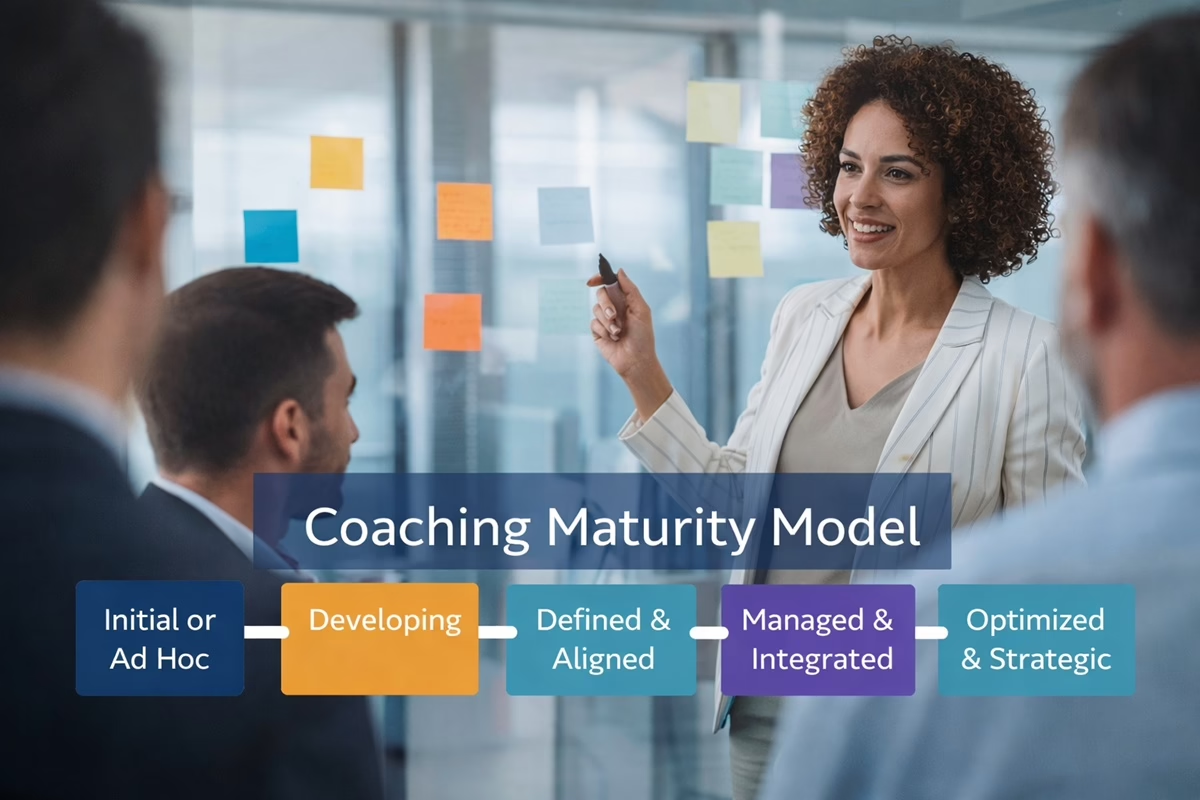
The Five Stages of Coaching Maturity — From Inconsistent Effort to Strategic Capability
At this stage, coaching happens inconsistently and usually depends on individual managers rather than an enterprise approach.
There is little role clarity, no shared routines, and few supporting tools.
Coaching may happen with good intentions, but it varies widely from team to team and rarely produces repeatable outcomes.
Organizations in the developing stage begin to recognize coaching as a capability worth strengthening.
Early structures emerge, some leaders engage more intentionally, and basic tools may be introduced.
Even so, coaching remains uneven. Teams may see pockets of progress, but the overall model is still forming.
At this point, coaching becomes more deliberate. Roles, expectations, and routines are defined, and coaching starts to align with broader performance and development goals.
Certified coaches or subject matter experts may support teams, and organizations often establish common standards, training pathways, and visibility into activity.
Managed and integrated organizations treat coaching as part of how the business operates.
Leadership supports it, measures are in place, and coaching is connected to operational priorities such as quality, performance, retention, or change adoption.
It is no longer a side initiative. It becomes a managed system that drives improvement.
At the highest level of maturity, coaching is woven into the culture.
Leaders coach consistently, learning loops are continuous, and technology enables targeted insights at scale.
Coaching is tied directly to business outcomes and continuously refined through data, feedback, and strategic priorities.
Maturity is not about moving quickly to the final stage. It is about building the right level of structure, capability, and alignment for your organization’s needs — then advancing with intention.
Coaching Maturity Model
The Signals That Define Coaching Maturity
Organization
Organizational maturity shows up in leadership alignment, governance, and strategic intent.
In early stages, coaching is local and reactive. In later stages, it is clearly supported by senior leaders, embedded in culture, and linked to business results.
People
People maturity reflects whether leaders and coaches have the skills, support, and career pathways needed to sustain effective coaching.
Strong coaching cultures do not rely on a few high performers. They build capability broadly and consistently.
Processes
Process maturity includes the routines, standards, and measurement practices that make coaching repeatable.
Without clear coaching cycles, follow-up mechanisms, and links to performance expectations, organizations struggle to scale what works.
Technology
Technology maturity ranges from manual spreadsheets and isolated tools to integrated platforms with dashboards, analytics, prioritization logic, and predictive insight.
The right technology does not replace coaching — it strengthens focus, visibility, and consistency.
How Leaders Can Use This Model
- Assess the current state of coaching across functions, teams, or business units.
- Identify capability gaps in leadership, governance, process discipline, and enabling tools.
- Prioritize investments that will move coaching from isolated effort to scalable practice.
- Build a roadmap that aligns coaching with transformation, service quality, employee performance, and customer outcomes.
Where to Start
Most organizations do not need to jump immediately to an optimized model. The better starting point is to assess where coaching is today and identify the few improvements that will make the biggest difference. That may mean clarifying ownership, standardizing a coaching routine, strengthening manager capability, or introducing better visibility into activity and outcomes.
What matters most is forward movement. A mature coaching model is built by aligning leaders, enabling teams, reinforcing process discipline, and using technology to scale what works.